


































Choosing Marble by the Proposed Piece Layout
Use identified slab photographs and the fabricator's proposed piece layout to discuss veining, orientation and seams before confirming a marble selection.
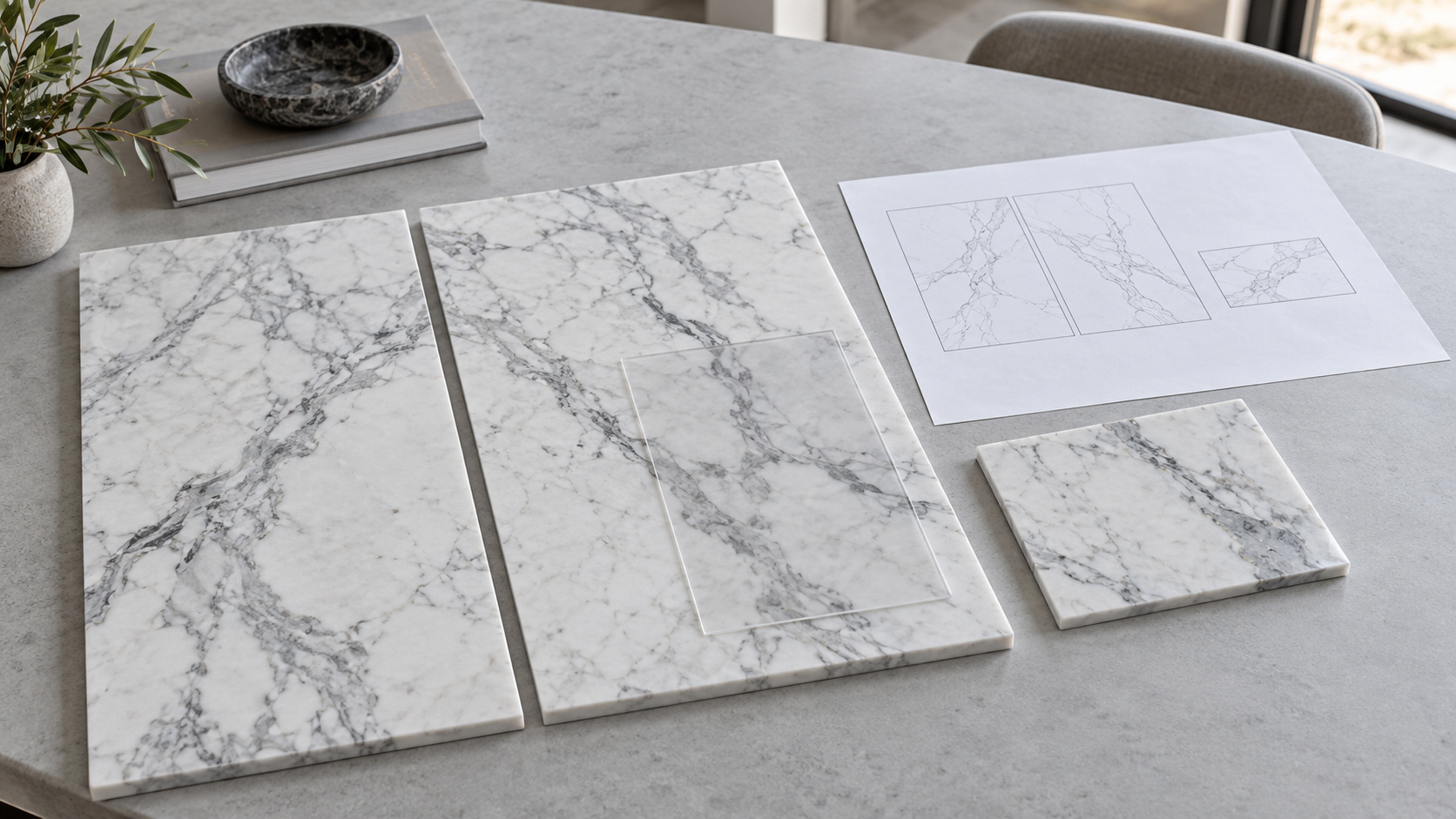
If a buyer selected a small marble sample for a larger surface, I would keep that sample reference in the enquiry and ask which actual slabs were being proposed. I would want full-face photographs with the supplier's slab identifiers, followed by the intended positions of the finished pieces. That would let us discuss the piece the buyer would receive, including which part of the photographed veining would remain visible after the proposed layout was applied.
I would keep each slab photograph with its finish description and ask for close views of the areas the buyer wanted to discuss. A close-up would stay next to a copy of the full photograph with its position marked. That would help me return to the same grey band or pale area when the buyer commented on it. If we used a physical sample for approval, I would label its slab reference and finish and keep a note of how it had been reviewed. I would retain the photographs as discussion records, with the agreed viewing conditions recorded wherever colour or surface finish was being assessed.
The next document I would request would be the fabricator's proposed piece layout for the actual project. The Natural Stone Institute's Use Natural Stone guidance discusses photographic images and layout communication with the fabricator. I would send the approved project information with the selected slab photographs and request a returned layout showing the piece references on them. I would also ask who would review the cutting and opening details for the project, and keep that review with the layout before approval. Their returned layout would stay with my visual-selection notes.
With the layout in front of us, I would compare the visible pieces as they would sit together. Which way would the main vein run across the face? What would appear at a joint or at an adjoining return? If a strongly marked part of the slab was placed in an area outside the selected pieces, I would want that to be visible in the proposal too. I would discuss the actual arrangement with the buyer, rather than describe every piece by the same general stone name and leave its appearance to be inferred.
For a requested mirrored arrangement, I would ask to see the proposed pair with the adjoining edges marked. If the request was for a vein to continue across a joint, I would have that joint identified in the layout too. I would keep the arrangement the buyer approved with the slab references, including any alternative they had considered. If a slab was substituted, I would send the new photographs and layout back for review. The earlier approval would remain attached to the earlier slab combination, even if the replacement carried the same commercial stone name.
In the shop's order file, I would keep the approved layout reference beside the slab photographs and finish notes. I would leave any marked natural feature or area referred to the fabricator visible on the saved copy. If another layout arrived, I would put it beside the approved one and ask which pieces had moved. I would ask for a revised approval when the selected appearance changed, keeping the earlier version in the file. That way, the order discussion could follow the actual choices made about the slab and piece positions, with the technical project checks remaining with the responsible professionals.
Share the product, specifications, quantity and destination to discuss sourcing options.